Grab Your 'Noculars: What My Toddler Taught Me About Studying the Bible
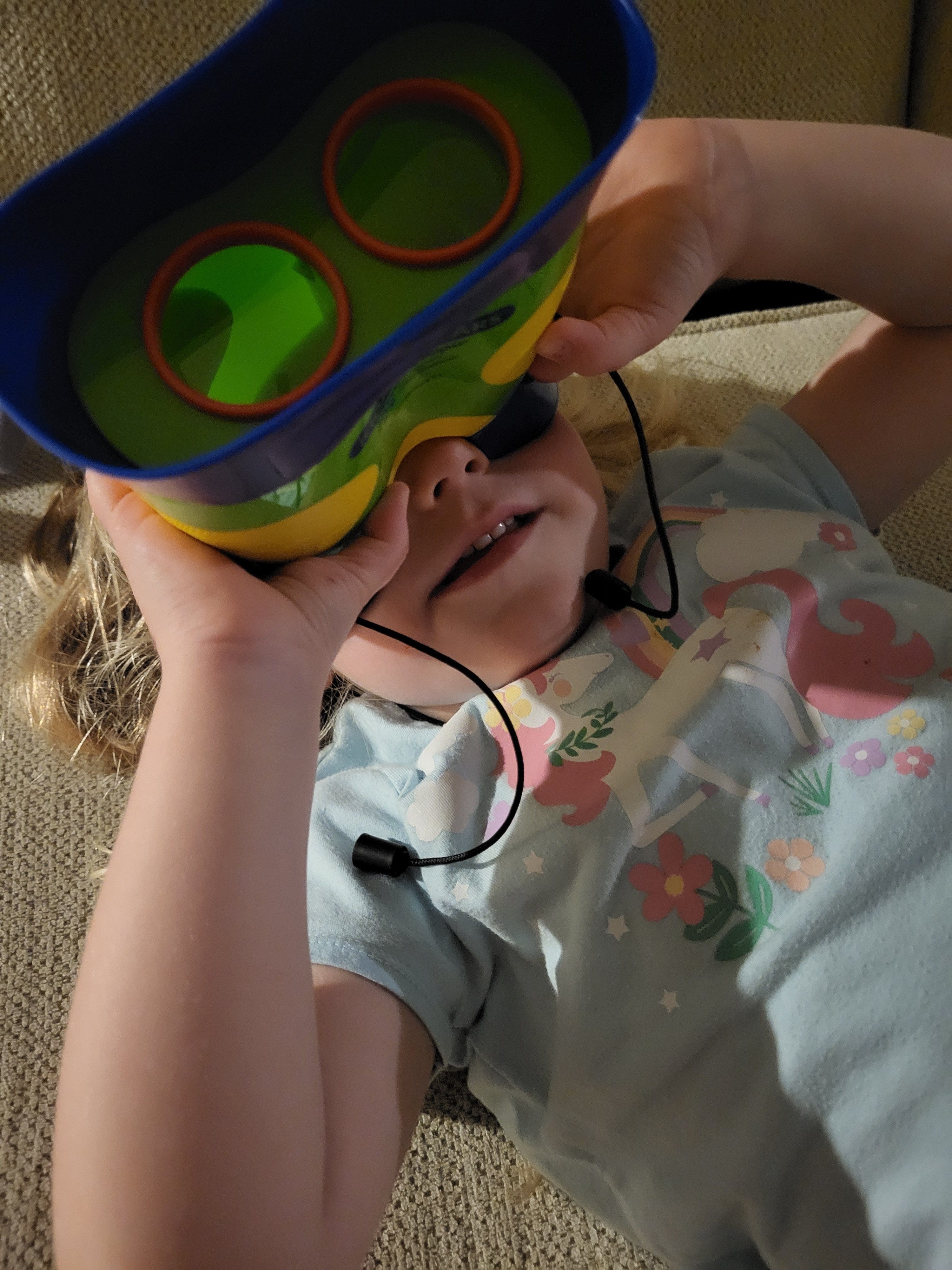
Grab Your 'Noculars
For Christmas, my two-year-old received a pair of Geosafari Binoculars. When life gets hard for her little brain, the first thing she grabs is her “noculars.” She uses them for all the important things—watching dinner guests drive out of the neighborhood, finding the lost remote, and watching Mickey Mouse Club House from the couch.I laugh every time she whips them out. She has the biggest blue eyes I’ve ever seen, but she wants help seeing what matters most. I think I could use a lesson in whipping out my ‘noculars.
I recently submitted a biblical teaching, hoping to be published in the Proverbs 31 Ministries First 5 App. Teaching the Bible is miles outside of my comfort zone, so when this writing challenge was presented, I was cautiously eager. I opened the email to my assigned verse. It was a passage on…hell. No joke.
I had four weeks to craft my teaching. Week 1, I wallowed in denial—I’m not writing about hell. But in Week 2, I put on my big girl pants, grabbed my ‘Noculars, and started researching. Then, I wrote. And as I did, I took notes on my notes to encourage you.
If you have an intimidating passage of scripture in front of you, take heart—after you panic for a minute, you can study it. And you can teach it. I know, because I did.
I’ll find out in July if my teaching is selected for publishing. If so, you’ll find me in the First 5 App in 2027. If not, I’ll share it here this summer! Win-win.
Here is how I started studying:
- Repetitive Reading- I lost count of how many times I read the passage. But each time I did, I noticed something new. The main point of my teaching, and the title, came from my 11th read-through. Hear me, friend: I didn’t read the passage 11 times in one sitting. I’m not crazy. Those readings occurred over four weeks (three of them in a mild panic when I opened the assignment the very first time).
- Ask Questions- Write down a list of questions. I usually say good questions lead to more questions. For example, who is speaking in this passage? To whom? What is their relationship? What’s being said? What’s the historical and cultural context of the conversation?
My pastor says that a good Bible reader is a confused Bible reader. There are some strange things in the Bible (see Judges 4:21). There are some things that just don’t make sense (see Genesis 22:2). But if you keep asking good questions, your research will lead you to good answers. - Bible Study Platform- An all-in-one tool like Logos helped me tremendously. This app offers commentaries, word dictionaries, original language tools, and more. It’s a truly incredible resource—10/10 recommend.
- Wise Counsel- My friends are generous, unpaid editors. I always have someone review my writing—not just for grammar, but for theology. I’m not an expert. This teaching stretched me, too. Having trusted eyes on it matters. Talk out what you learn with your friends.
This just scratches the surface of steps you can take to study a passage. But it’s a good start. Try it. Pick a passage, read it several times, ask questions, and see where it leads.
